Location
St. Thomas
MSC, 221
Department
College of Science and Mathematics
Biological Sciences, Center for Marine and Environmental Studies (CMES)
Biography
main research and teaching interests
Coral Reef Ecology, Coral Disease Ecology, Coral Restoration, Biostatistics and modeling
Biography
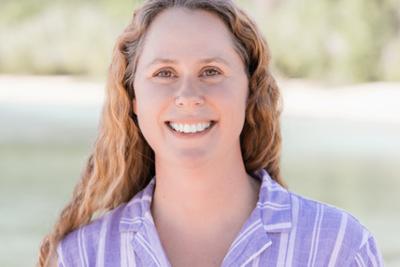
Marilyn Brandt is a Research Professor of Marine and Environmental Science in the Center for Marine and Environmental Studies (CMES). She has a bachelor’s degree in biology from New York University and a Ph.D. in marine biology and fisheries from the University of Miami. She joined UVI as research faculty in 2010. Her research focuses on understanding how disease is damaging coral reefs and how coral conservation and restoration can reverse that damage. She is a past Director and current advisor and instructor of biostatistics for the UVI Master of Marine and Environmental Science (MMES) program. She is a faculty mentor and intern advisor for high school, undergraduate, and graduate students in the SEAs Islands Alliance program. She is the Research Team Lead and an Executive Team member for the U.S. Virgin Islands Coral Disturbance Advisory Committee and she directs Reef Response, a coral restoration program at UVI which is focused on science-based coral restoration in the northern U.S. Virgin Islands.Abstract of Research
The long-term goal of my research is to link local and regional stressors to the processes that structure complex coral communities and understand how these translate to ecosystem functioning. To accomplish this goal, my research combines field-based ecological studies with advanced analytical techniques. This research includes conducting intensive field studies specifically targeted towards quantifying coral susceptibility and resistance to mortality-causing stressors, with a particular emphasis on the risk factors involved in coral disease incidence, severity and spread. I then use the results of these studies and data from established monitoring programs to parameterize empirically-based modeling tools used to understand how colony-level characteristics (e.g., growth rates) and impacts (e.g., mortality due to disease) translate to ecosystem-level dynamics, with the intent of identifying specific properties that maintain resilience in diverse coral communities.Related Publications